

The Meningioma Enigma: Science, Lived Experience & Quality of Life - Virtual Global Webinar

Spotlight Speaker Presentation: Dr. Ekokobe Fonkem, DO — Neurologist–Neuro-Oncologist
This summary captures the substance and spirit of Dr. Ekokobe Fonkem’s Spotlight Speaker presentation, delivered during MBTN’s 90-minute global webinar. It is written for the full community that the webinar was designed to serve — physicians and clinicians, meningioma survivor-thrivers and their families, caregivers, healthcare partners, community advocates, and grant funders alike — so that each participant, regardless of background, leaves with a clear and accurate understanding of what was presented and why it matters.
A Unifying Theme: Beyond Tumor Control, Toward Lived Quality of Life
Dr. Fonkem’s presentation was anchored in a theme that ran throughout the entire webinar: the urgent need to bridge the gap between tumor treatment alone and the equally critical work of evaluating and addressing patients’ long-term, patient-reported, health-related quality of life (HRQoL). Clinical success in meningioma care has traditionally been measured by imaging stability and recurrence rates. Dr. Fonkem made the case that this measure, while necessary, is not sufficient — that the psychosocial, cognitive, financial, and vocational deficits patients carry long after treatment deserve the same rigor, research investment, and clinical attention as the tumor itself.
This framing matters to every audience in the room: it gives clinicians a research agenda, gives survivor-thrivers language for experiences they may not have seen formally validated, gives caregivers context for what their loved ones are navigating, and gives funders a clear rationale for why HRQoL research deserves support alongside oncologic research.
About the Spotlight Speaker
 | Spotlight Speaker Dr. Ekokobe Fonkem, DO Neurologist-Neuro-Oncologist Vice Chair - Neurology - Neuro-Oncology Research Professor, Translational Neuroscience (Clinical Scholar) University of Arizona Inaugural MBTN Board Member, 2019 |
Dr. Fonkem was introduced by Dr. Joh-Anne Evans Coleman, MBTN Founder & CEO, who noted that Dr. Fonkem’s research on meningioma clusters has long been a driving force behind the collaboration between MBTN and the academic neuro-oncology community.
Setting the Stage: Meningioma and Quality of Life
Dr. Fonkem opened by grounding the audience in a fact that many in the room already live with: meningiomas are common. They are frequently discovered incidentally, found during imaging ordered for an unrelated complaint, with no warning and often no prior symptoms. For many survivor-thrivers, this is precisely how their own diagnosis began.
He then addressed a quality-of-life issue with real-world consequences. Although meningiomas are often slow growing, a persistent misconception among employers treats a meningioma diagnosis as a marker of diminished cognitive capacity. Dr. Fonkem was direct that this misconception inflicts genuine harm — affecting survivor-thriver’s professional standing and job security long after treatment is complete, and often long after their actual functional capacity has returned. This point stood out as one of the clearest, most concrete illustrations of the HRQoL gap that underpinned his presentation’s theme: a tumor can be successfully treated, yet the survivor still endures ongoing, unaddressed social and economic harm.
Grade 1 Meningioma: Favorable Biology, Real Burden
Dr. Fonkem reviewed the clinical picture for Grade 1 meningiomas, which have a recurrence rate of less than 5% within 5 years after a good surgical resection. Management typically consists of surveillance MRI every three to six months.
For a physician audience, this is a reassuring prognosis. But Dr. Fonkem was careful to translate what that surveillance schedule actually means for the patient living it: even with favorable biology, patients carry significant psychological and financial burdens — the recurring stress of “scanxiety” before each surveillance appointment, and the real-world cost of frequent imaging. This is precisely the kind of patient-reported burden that does not appear in a recurrence-rate statistic, and exactly the kind of HRQoL deficit his presentation’s central theme calls on the field to start measuring and addressing systematically.
Grade 2 and Grade 3 Meningioma: Escalating Risk and Treatment Burden
Dr. Fonkem described Grade 2 (atypical) meningiomas as carrying a substantially higher 25% recurrence probability within five years, often necessitating radiation therapy. He was candid about the trade-off this involves: radiation reduces recurrence risk but carries its own long-term risks, including secondary tumors, memory decline, and fatigue — additional layers of HRQoL impact stacked on top of the original diagnosis.
He described Grade 3 meningiomas as the most aggressive category — biologically comparable to glioblastoma — with an 80% recurrence rate even after resection. These cases require comprehensive multimodal treatment involving radiation, chemotherapy, or immunotherapy. For families and caregivers in the audience navigating a Grade 3 diagnosis, Dr. Fonkem’s clear, unflinching framing offered something valuable in itself: an honest clinical picture, delivered with respect for what that honesty costs to hear.
A Call to Action: Advocacy as a Research Accelerant
Dr. Fonkem closed his formal remarks with a direct call for community mobilization. He pointed to brain cancer communities that have achieved meaningful research progress specifically because of sustained, organized advocacy and public awareness campaigns — and challenged the meningioma community to do the same.
As a concrete next step, he announced a Neuro-Oncology Symposium scheduled for October 17 at the University of Arizona in Phoenix, and personally invited attendees — patients, families, clinicians, and community partners alike — to participate. He framed attendance not as a passive opportunity but as a seat at the table in shaping future research priorities and resource allocation for meningioma brain tumors. Dr. Evans Coleman echoed the sentiments to grant funders and healthcare partners, this is a tangible, near-term opportunity to engage directly with the community and research agenda Dr. Fonkem described.
Live Q&A: Radiation Decision-Making for Grade 2 Meningioma
During the Q&A, meningioma community member Tami Stafford asked whether all Grade 2 meningiomas require radiation therapy. Dr. Fonkem explained that radiation is recommended per NCCN guidelines specifically to delay recurrence, while also noting that ongoing research into immunotherapy and targeted therapies is actively exploring alternative paths — a reminder that today’s standard of care is a present-tense recommendation, not a permanently closed question.
Featured Alongside Dr. Fonkem
Dr. Fonkem’s Spotlight presentation was part of a broader program structure designed to connect rigorous science with lived experience. Two fellow contributors shared the spotlight:
Research Highlight - Dr. Fonkem’s Colleague Dr. Amir HZ Najafabadi, Ophthalmology Resident & Post Doc Fellow, Meninigoma Researcher Leiden University Medical Center South Holland, The Netherlands
| 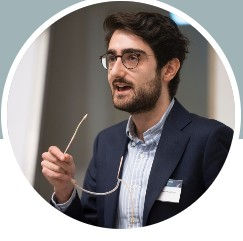 |
Dr. Najafabadi, a colleague of Dr. Fonkem’s in meningioma research, delivered the Research Highlight segment from the Netherlands via an AI Agent — a participation model that let him engage with the live audience interactively and in real time despite the distance and time difference separating Leiden from the webinar’s primarily U.S.-based audience. His remote, AI-mediated presence reflects the same spirit of bridging gaps that ran through Dr. Fonkem’s theme: in this case, bridging the geographic and logistical gap that so often keeps international research voices out of patient-facing community conversations.
Lived-Lived-Experience Panel Dr. Joh Evans Coleman MBTN Founder & CEO Meningioma Survivor-Thriver - Joined by Fellow Survivor-Thrivers on the panel ...Tumor control isn’t the finish line... ...The scan can be clear, and the fight can still be real... | |

| |
Because the diagnosis ends. The recovery — and the advocacy — doesn’t. |
Dr. Evans Coleman, a Neurobehavioral Psychologist, who also introduced Dr. Fonkem to open the session, anchored the Lived-Experience Panel alongside fellow survivor-thrivers (Carrie, Ashli, and Terri), grounding the day’s science in the first-person accounts of people living with the long-term health-related quality of life (HRQoL) realities Dr. Fonkem described.
Why This Matters — For Every Reader
For Clinicians & Healthcare Partners A research and clinical agenda: Deficits in HRQoL — psychological, cognitive, financial, and vocational — require systematic evaluation, similar to tumor control. The symposium on October 17, 2026, at the University of Arizona provides a concrete venue for action. | For Caregivers A clearer understanding of what Grade 1 to Grade 3 diagnoses involve, along with explicit recognition that those you support face challenges beyond the tumor itself. | ||
For Survivor-Thrivers & Families It is important to acknowledge that the burdens of surveillance, treatment side effects, chronic psychosocial challenges, and workplace stigma are real and recognized issues. These factors must be included in formal research and advocacy discussions. They should not be overlooked in tumor care assessment protocols, nor should individuals have to face them alone or keep quiet about their experiences. | For Community Partners & Grant Funders A compelling, evidence-based rationale for investing in HRQoL-focused meningioma research, plus an immediate engagement opportunity at the University of Arizona symposium in October 2026. | ||
Meningioma Brain Tumor Network, Inc | CoLaB-orating Together |


Comments